Abstract
Abstract
Background and Objective: Reproducible neural time-series analysis requires more than preserving code: the scientific interpretation also depends on the exact preprocessing choices, model equations, parameter semantics, numerical settings, random seeds and transformations that produced a result. Existing neuroscience ecosystems provide mature capabilities for signal analysis, workflow execution, model simulation and data/code provenance, but these activities are often distributed across separate tools. NeuroLab OS was developed to maintain continuity between researcher-visible model semantics and executable analysis provenance within one local workflow.
Methods: We describe NeuroLab OS version 0.1.1, a Windows x64 technical beta comprising an Electron/React desktop interface and a bundled local Python/FastAPI scientific engine. The evaluated runtime supports EEG-oriented and generic time-series ingestion, ROI/BOLD matrix workflows, preprocessing and explicit quality-control review, a registry of 11 computational model families, seeded summary-feature fitting, eight explicitly in silico perturbation operations, and provenance-aware reporting. Model families are classified as literature-anchored dynamical models, statistical/engineering baselines, or NeuroLab proxy/surrogate implementations. We distinguish software verification from external scientific validation and evaluate the frozen release using regression, workflow, packaging, runtime and artifact-integrity evidence.
Results: The release passed 82 backend tests and 38 focused workflow tests; desktop type checking, production build, local engine build and Windows packaging also passed. The packaged application launched successfully, the bundled engine returned HTTP 200 on its health endpoint, all 11 model specifications were present, and the final ZIP checksum matched its manifest (SHA-256 6bd8dcd9c4372cf6edd8506bcfe7a18a6f7edffb2748ccdb4d5c3047c780e2da). The test inventory includes model-regression, oscillator-frequency, Ornstein–Uhlenbeck sanity, parameter-recovery and intervention-consistency checks. These findings establish implementation and release-level verification, not biological or clinical validity; publication-scale external reference-dataset concordance remains outstanding.
Conclusions: NeuroLab OS contributes an integrated research-software architecture in which QC decisions, model definitions, fitting, simulation, model-space perturbations and reporting are connected within a traceable local execution path. Its primary novelty is the continuity of model semantics and computational lineage rather than a new neural equation. The present release is suitable as a verified technical beta; an archival clean-source release, external EEG/ROI-BOLD benchmarks and cross-machine numerical reproduction are required to strengthen the evidence from software verification toward scientific validation.
1. Introduction
Computational neuroscience increasingly depends on multi-stage analysis chains in which the reported result is determined not only by the recorded signal, but also by data organization, preprocessing, quality-control (QC) decisions, model specification, numerical settings, random seeds and reporting choices. Reproducibility therefore depends on preserving both computational assets and the semantic information required to understand how a model or analysis was instantiated [1, 2]. In practice, discrepancies between a written method and its executable implementation can materially change a computational result, making explicit model and workflow specifications a scientific requirement rather than merely a software-engineering preference [3].
Mature neuroscience ecosystems solve important parts of this problem. BIDS and EEG-BIDS standardize data organization [4, 5]; MNE-Python, EEGLAB and FieldTrip provide broad electrophysiology analysis environments [6, 7, 8]; Nipype and BIDS Apps support workflow execution [9, 10]; DataLad manages versioned relationships between data and code [11]; and The Virtual Brain (TVB) provides specialized large-scale brain-network simulation [12, 13]. More recent research-software frameworks illustrate complementary design strategies: Pynapple emphasizes stable abstractions for diverse time-resolved neuroscience data [14]; BrainPy focuses on flexible, performant brain-dynamics programming [15]; and NeuroWRAP integrates configurable neurodata workflows with sensitivity and robustness analysis [16]. Reproducible EEG workflow demonstrations further show the value of making a complete analysis path executable and inspectable rather than documenting only isolated steps [17].
These advances do not eliminate a practical integration gap in model-based neural time-series work. A preprocessing decision may be recorded in one environment, a model equation in another, a parameter fit in a job log, a simulated perturbation in an ad hoc script and the final figure in a manually assembled report. This fragmentation matters because analytical variability can substantially affect neuroimaging results [18, 19, 20], while operating-environment differences can affect computational reproducibility [21]. For dynamical models, an additional semantic risk arises: a reviewer or researcher needs to know whether the equation displayed or described is the equation actually executed, what parameters and units were used, whether an optimization result is identifiable, and whether a manipulation is a native model mechanism or a software proxy.
NeuroLab OS was developed around this continuity problem. It is a local-first desktop research environment that connects neural time-series ingestion, preprocessing, explicit QC, scientist-visible computational-model specifications, seeded model fitting, simulation, explicitly in silico perturbation and provenance-aware reporting. The scientific contribution is therefore a research-software architecture, not a claim to have introduced established models such as Wilson–Cowan, Kuramoto, Jansen–Rit, Ornstein–Uhlenbeck (OU) or Hopf dynamics [22, 23, 24, 25, 26]. Reduced and surrogate implementations are labelled as such rather than being presented as canonical biological models.
This paper describes and verifies the scientific runtime of NeuroLab OS v0.1.1. We address four questions: (i) which scientific modules and model families are implemented; (ii) how model semantics and intervention boundaries are exposed to prevent unsupported interpretation; (iii) whether the frozen release satisfies its software and runtime contracts; and (iv) which evidence still separates the current technical beta from an externally validated reference platform. This final distinction follows the computational-neuroscience literature in treating verification of an implementation and validation against an external reference or intended biological domain as related but different evidential tasks [3, 1].
The specific contributions evaluated here are fourfold. First, NeuroLab connects QC, model review, fitting, simulation, model-space perturbation and reporting in one local execution path. Second, the model registry exposes an explicit fidelity taxonomy so that literature-recognizable dynamical systems, statistical baselines and reduced proxies are not presented as equivalent scientific claims. Third, a scientist-visible model specification contract places equations, parameter semantics and limitations at the execution boundary rather than only in documentation. Fourth, release evidence is organized as a hierarchy that separates artifact/build integrity, software-contract verification, numerical sanity checks and external scientific validation. The contribution is consequently a traceability-oriented biomedical software design rather than a new neural model family.
2. Methods
2.1. Evaluated release and scope
The evaluated artifact was NeuroLab-OS-UNSIGNED_BETA-0.1.1-win-x64.zip, generated on 16 August 2026. The release manifest identifies the package as an unsigned Windows x64 beta; it is not a signed production installer. The scientific engine reports an internal service version of neurolab-os-0.4.0; this is treated as an engine/API version distinct from the desktop release version 0.1.1.
The software analysis in this paper is restricted to the scientific runtime: desktop interface, local engine, data workflows, preprocessing/QC, model registry, fitting, recommendation logic, in silico interventions, and reporting/provenance. Licensing and commercial control-plane functionality are outside scope. No human or animal data were used to generate the release-verification results reported here; therefore the software verification itself did not constitute human-subjects or animal research.
2.2. Local-first software architecture
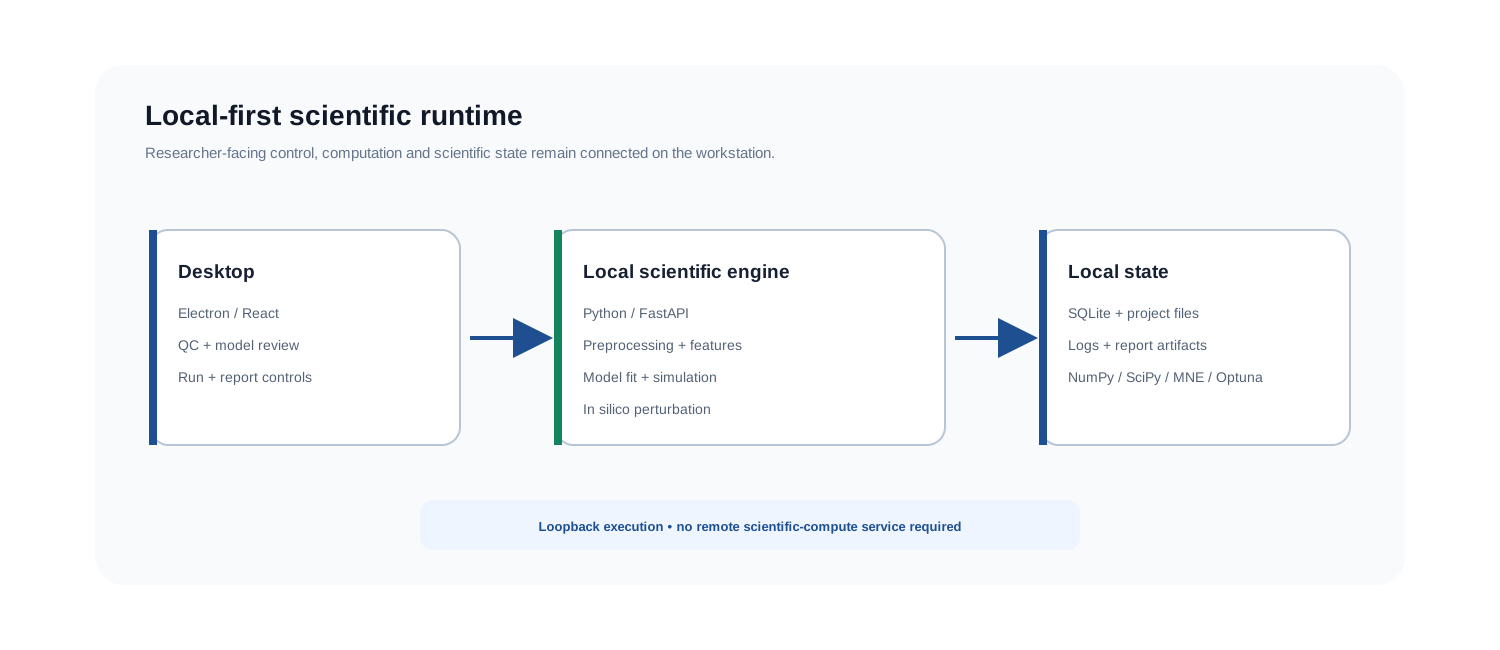
NeuroLab OS packages an Electron/React desktop interface with a local Python/FastAPI engine. The desktop communicates with the scientific engine over loopback, while datasets, database state, logs and generated reports remain local to the workstation in the evaluated configuration (Fig. 1). The packaged engine includes numerical and scientific dependencies used by the application, including NumPy, SciPy, pandas, SQLAlchemy and MNE-related functionality. This architecture is intended to make model execution and report generation available through a researcher-facing application without requiring a remote scientific-compute service.
2.3. Scientific workflow and data handling
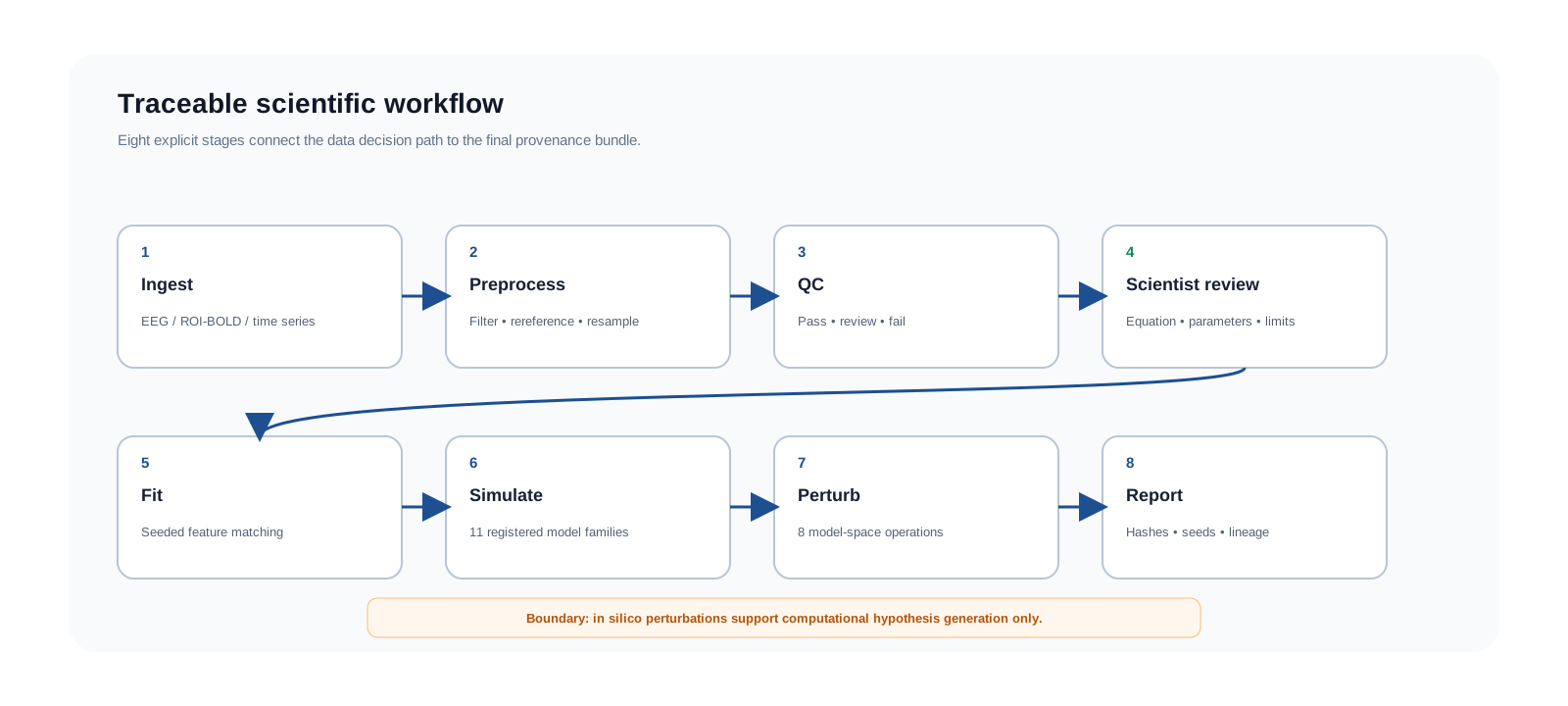
The implemented workflow is organized as a sequence from data ingestion to reporting (Fig. 2). The present release supports three practical data contexts: EEG-oriented time-series ingestion using BIDS-lite conventions and EDF-first handling; ROI/BOLD time-series matrices for fMRI-derived regional signals; and generic multichannel time series. The fMRI path does not perform raw DICOM or NIfTI preprocessing and should not be described as a replacement for dedicated fMRI preprocessing systems.
EEG/time-series preprocessing includes configurable detrending, notch and Butterworth filtering, average or median rereferencing, resampling, variance-based channel screening, standardization, spectral summaries and event-related epoch handling. Where a flagged channel is replaced by the mean of retained channels, the operation is described as mean-channel replacement rather than spherical or anatomical electrode interpolation. The release should likewise not be interpreted as providing a complete independently validated automatic ICA/SSP artifact-correction pipeline.
QC is represented as an explicit research decision rather than a hidden preprocessing side effect. Dataset/run states can be routed to pass, review or fail outcomes, allowing downstream modelling to remain associated with the decision path that permitted it. A model-review layer exposes specification metadata before execution, including the model identity, equations/description, parameter schema and limitations. The formal objective is that the scientist reviews the same model contract that drives the run; the v0.1.1 release includes regression coverage for the model-detail contract and corrected a previously stale Stuart–Landau desktop equation.
2.4. Scientist-visible model specification contract
A central design requirement is that the model presented to the researcher immediately before execution is scientifically identifiable. For each registered family, the model-detail surface is designed to expose model identity, a human-readable mathematical description or equation, parameter names and bounds, available unit semantics, implementation fidelity, and explicit limitations. Solver, sampling, seed and fitting configuration are retained as run metadata where applicable. The objective is not to turn a graphical review step into proof of model validity; it is to reduce a narrower but consequential failure mode in which the scientist approves one mathematical description while the runtime executes another.
The importance of this contract was illustrated during verification of v0.1.1: a stale desktop Stuart–Landau equation was detected against the backend canonical specification and corrected before the release was packaged. A regression test now checks the model-detail endpoint against the canonical backend equation and source metadata. This establishes consistency for the reviewed specification in the evaluated release, but the current sidecar manifest does not yet provide a complete immutable per-model tuple of source hash, equation hash, equation version and parameter-schema hash. We therefore treat cryptographic binding of every reviewed specification to every executable model as an archival-release requirement rather than a capability fully demonstrated here.
2.5. Computational model registry
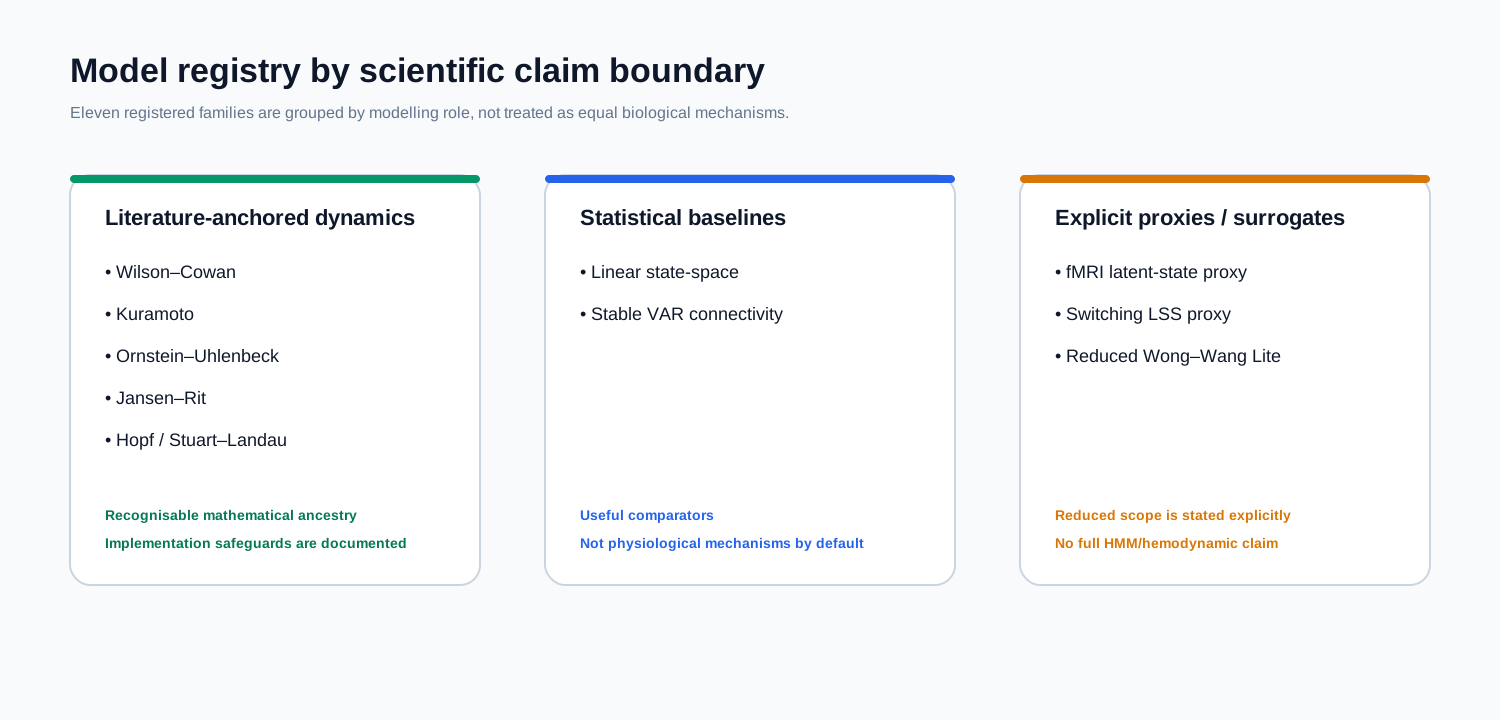
The v0.1.1 runtime registry contains 11 model families (Table 1; full equations and interpretation boundaries are provided in Supplementary Table S1). To avoid implying equal biological status, we use three categories. Literature-anchored dynamical models implement recognizable structures derived from established mathematical models. Statistical/engineering baselines provide useful time-series comparators without being neural-mass models. Proxy/surrogate implementations intentionally simplify a broader modelling family and are labelled accordingly.
This classification is important for software validity. A correct numerical implementation of a surrogate does not make the surrogate biologically equivalent to the canonical model on which it is inspired. Conversely, statistical baselines can be numerically well-defined without having a neural-population interpretation.
2.6. Feature extraction, model fitting and recommendation
The fitting layer compares empirical and simulated summary features rather than performing Bayesian posterior inference. Implemented summaries include Welch power spectral density (PSD), autocorrelation, a mean absolute functional-connectivity summary, frequency-band power and synchrony. For empirical feature vector E and simulated feature vector S(θ), the fitted parameter vector is obtained by minimizing a weighted composite distance,
where the individual terms are mean-squared, absolute or normalized band-power discrepancies as appropriate to the feature type. The implementation uses seeded Optuna/TPE optimization [29]. Repeated-seed intervals, when generated, are empirical robustness summaries and are not Bayesian credible intervals.
| Model | Category | Intended computational role / interpretation boundary |
|---|---|---|
| Wilson–Cowan | Anchored dynamical | Coupled excitatory/inhibitory population dynamics; time-constant units are not interpreted physiologically unless explicitly specified. |
| Kuramoto | Anchored dynamical | Coupled phase oscillators; ω is an angular-frequency variable and should not be conflated with frequency in Hz. |
| OU baseline | Anchored stochastic | Mean-reverting stochastic baseline with optional coupling. |
| Jansen–Rit | Anchored structural form | Six-state cortical-column structure with NeuroLab numerical scaling/safeguards; not claimed as a canonical parameter set. |
| Hopf/Stuart–Landau | Anchored dynamical | Diffusively coupled normal-form oscillator network used as a whole-brain-style dynamical model [26, 27]. |
| Linear state-space | Statistical baseline | Discrete linear stochastic dynamics; engineering/statistical comparator rather than physiological model. |
| Stable VAR connectivity | Statistical baseline | Stable vector autoregressive dynamics; coefficients are model-derived and not anatomical connectivity by default. |
| fMRI latent-state | Proxy/surrogate | Markov-switching ROI/BOLD time-series proxy; not a complete HMM inference pipeline. |
| Stuart–Landau | Extended dynamical form | Complex-amplitude oscillator with phase-lagged network coupling and deterministic/stochastic drive. |
| Switching linear state-space | Proxy/surrogate | Regime-switching linear dynamics; not an exact reproduction of a specific HMM inference framework. |
| Reduced Wong–Wang Lite | Proxy/surrogate | Wong–Wang-inspired recurrent ROI model with a compact BOLD-like smoothing transform; not a full hemodynamic forward model [28]. |
A model-recommendation module ranks candidate models from dataset-derived features. Its numerical output is a deterministic heuristic ranking score, not a calibrated probability that a model is biologically correct. The current beta still exposes the word “confidence” in part of the researcher-facing interface; this terminology should be interpreted as a ranking heuristic and is a known presentation limitation rather than a probabilistic model-selection claim.
The EEG feature/QC code in v0.1.1 also contains a known definition mismatch: one subsystem uses alpha/beta boundaries of 8–12/12–30 Hz, whereas another uses 8–13/13–30 Hz. The manuscript therefore does not treat band-power values from those two subsystems as definition-identical. A single versioned band registry is recommended for the archival publication release.
2.7. In silico perturbation layer
Eight perturbation operations are represented in the scientific engine: node lesion, connectivity weakening, connectivity strengthening, increased inhibition, decreased inhibition, periodic stimulation, noise injection and gain modulation. These operations are model-dependent transformations rather than a single universal biological intervention model. For a model with parameter/state representation θ, an intervention is best described abstractly as
where m identifies the model and ϕ the intervention settings. A periodic drive, for example, is implemented in the familiar form si (t) = A sin(2πf t). Other operations map to native parameters where available or to explicitly labelled proxies where no direct mechanism exists. Gain modulation remains heuristic in models lacking a native gain parameter. The resulting changes in PSD/band power, synchrony, connectivity summaries or signal-level differences are computational effects only; no therapeutic, causal or clinical inference follows from them.
2.8. Provenance and reporting
NeuroLab OS links data identity, preprocessing configuration, model/run metadata, seeds and generated artifacts through its local workflow. Reports can include machine-readable manifests, figure recipes, hashes and lineage metadata. The release is accompanied by a ZIP manifest and SHA-256 checksum, and a scientific sidecar manifest records release/test metadata. For a publication-grade archival release, the provenance layer should be strengthened further by embedding per-model immutable source, equation and parameter-schema hashes together with a clean Git commit/tag.
2.9. Verification and validation framework
We use the terms verification and validation conservatively. Verification asks whether the software implementation and packaged runtime satisfy their stated computational contracts; validation asks whether model or analysis outputs agree with an independent reference, empirical system or intended scientific use within a defined tolerance or domain [3, 1]. This distinction is important because a simulator can be internally consistent while still being an inadequate representation of a biological system, and a biologically motivated model can be implemented incorrectly.
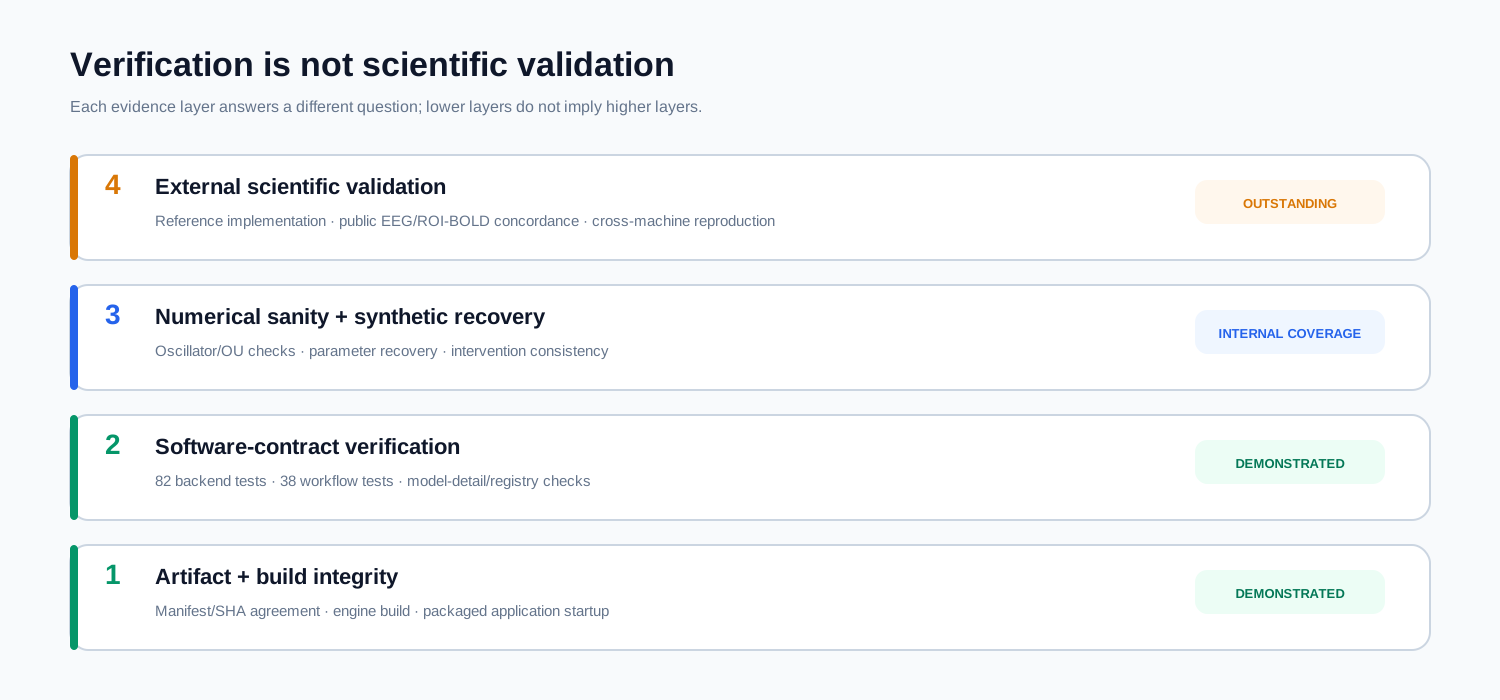
For NeuroLab OS we therefore organize evidence into four levels (Fig. 3): (1) artifact identity and build integrity; (2) software-contract verification; (3) numerical sanity and synthetic recovery checks; and (4) external scientific validation. The present release contains evidence for the first three levels, although publication-scale distributions for the numerical benchmarks are not included in the release report. Level 4—for example concordance with an independent MNE/EEGLAB pipeline on a public EEG dataset, or reference-model trajectory agreement—is not claimed in this manuscript. This evidence hierarchy is consistent with prior calls for quantitative model-validation workflows and reproducible computational-neuroscience practice [3, 2].
2.10. Release verification
Verification was performed against the canonical v0.1.1 source build before packaging. The backend test command python -m pytest backend/tests -q returned 82 passed, 0 failed and one warning. The focused workflow suite returned 38 passed, 0 failed. Desktop type checking, desktop production build, local engine build and unsigned-beta packaging passed. The final ZIP was expanded to verify the presence of resources/app.asar and the bundled neurolab-engine.exe. The packaged application was launched, and the engine health endpoint returned HTTP 200 with a local-runtime status. The canonical model registry contained all 11 expected model keys.
3. Results
3.1. Release-level software verification
The release verification establishes an executable scientific surface spanning data handling, preprocessing/QC, model specification, simulation, fitting, model recommendation, perturbation analysis and report generation. Table 2 summarizes the observed release checks. Importantly, these results answer the software-engineering question “does the implemented workflow execute as specified by its tests and packaging checks?” They do not answer the biological question “is every parameterization an empirically valid representation of a neural system?”
The test inventory reported for the release includes numerical regression coverage for the complete model registry, oscillator-frequency sanity checks, OU analytic sanity checks, parameter-recovery benchmark hardening and intervention-consistency tests. The distributed release evidence reports their inclusion within the passing backend suite but does not provide publication-scale benchmark distributions or external reference-dataset concordance. Accordingly, we treat these as implementation-verification evidence rather than as a substitute for external validation.
| Check | Result | Interpretation |
|---|---|---|
| Backend regression suite | 82/82 passed | Implemented backend contracts covered by the suite were satisfied. |
| Workflow suite | 38/38 passed | Core scientific workflow routes/services passed focused regression tests. |
| Desktop type check / build | Passed / passed | Renderer and desktop code compiled in the release environment. |
| Scientific engine build | Passed | Local Python engine was successfully frozen for Windows. |
| Unsigned beta packaging | Passed | A complete Windows x64 ZIP was generated from the build. |
| Packaged desktop launch | Passed | The packaged application remained running during smoke verification. |
| Engine health check | HTTP 200 | Bundled local service started and responded as expected. |
| Model registry | 11/11 present | All documented model specifications were available. |
| ZIP integrity | SHA-256 matched | Release checksum matched the supplied manifest. |
3.2. Evidence boundary and validation readiness
Table 3 separates the evidence currently available from evidence that would be required for stronger scientific claims. This prevents a common error in research-software reporting: treating successful execution or unit tests as evidence that a model is biologically correct. Quantitative benchmark studies in computational neuroscience typically report distributions of accuracy, convergence, sensitivity or reference agreement rather than only the existence of a test harness [3, 30, 15]. NeuroLab’s current benchmark infrastructure is therefore best interpreted as a reproducibility and regression foundation on which publication-scale validation experiments can be run.
| Evidence layer | Evidence in v0.1.1 | What it supports | What remains for stronger claims |
|---|---|---|---|
| Artifact identity | ZIP SHA-256 and manifest match | Exact identity of the evaluated binary artifact | Archival source DOI and clean signed/tagged release |
| Software contracts | 82 backend and 38 workflow tests; build and runtime smoke checks | Implemented routes, registry and packaged-runtime behaviour covered by tests | Independent replication of build and test process |
| Numerical sanity | Model-regression, oscillator-frequency, OU sanity, recovery and intervention-consistency tests are reported in the test inventory | Internal numerical guardrails and regression detection | Publication-scale distributions, tolerances and independent reference implementations |
| Scientific validation | Not provided as an external benchmark in this release | No external-validity claim is made | Public EEG/ROI-BOLD benchmark; cross-tool numerical concordance; cross-machine reproduction |
| Biological/clinical validity | Not evaluated | No causal, therapeutic or clinical claim | Separate empirical/clinical study designed for the intended use |
3.3. Model-semantic boundaries
The model registry is heterogeneous by design (Fig. 4). The strongest scientific safeguard is therefore not a claim that all models have equal fidelity, but the explicit separation of model roles. Wilson–Cowan, Kuramoto, OU, Jansen–Rit and Hopf/Stuart–Landau have recognizable mathematical ancestry [22, 23, 25, 24, 26]; linear state-space and VAR are statistical baselines; the fMRI latent-state and switching-state models are proxies/surrogates; and Reduced Wong–Wang Lite intentionally uses a reduced recurrent-population and BOLD-like proxy rather than a full hemodynamic forward model. This classification prevents software availability from being mistaken for physiological validation.
3.4. Reproducibility properties of the release
The final beta artifact was independently checksum-verifiable: the release manifest and recomputed SHA-256 both identified 6bd8dcd9c4372cf6edd8506bcfe7a18a6f7edffb2748ccdb4d5c3047c780e2da. The release package contained both the Electron application archive and the frozen scientific engine. These properties establish artifact identity. Reproducibility at the scientific-result level additionally requires stable input data, model/configuration records and environment information; NeuroLab’s report/provenance layer is designed to retain these items, but cross-machine numerical equivalence has not yet been demonstrated as a publication-scale experiment.
4. Discussion
NeuroLab OS is best positioned as an integration layer for traceable model-based neural time-series work rather than as a replacement for established neuroscience ecosystems. MNE-Python, EEGLAB and FieldTrip remain substantially broader and more mature for electrophysiological signal processing [6, 7, 8]; BIDS, BIDS Apps and DataLad address standardization, workflow execution and versioned computational assets [4, 10, 11]; TVB provides specialized large-scale brain-network simulation [12, 13]; BrainPy provides a general-purpose programming framework for efficient brain dynamics modelling [15]; Pynapple provides stable abstractions for time-resolved neuroscience data [14]; and NeuroWRAP demonstrates how integrated workflows can support sensitivity and robustness analysis [16]. NeuroLab’s distinguishing design objective is narrower: keep QC decisions, researcher-visible model semantics, fit configuration, model-space perturbations and report lineage connected in one local application. The intended advantage is therefore not maximal preprocessing breadth, the number of available equations, or simulator speed; it is cross-stage semantic continuity between what the researcher reviews, what the runtime executes and what the report records.
Three aspects of the design are potentially useful to research practice. First, the model-review step makes model selection and model semantics visible events rather than hidden function calls. This matters in a heterogeneous registry where a statistical baseline, a literature-recognizable dynamical form and a purpose-built surrogate may all produce plausible time-series output while supporting very different interpretations. Second, the local architecture reduces dependence on a remote scientific-compute service for data that laboratories may prefer to retain on workstation or institutional storage. Third, provenance is designed as an output of the workflow: dataset identity, processing configuration, model/run metadata, seeds, figure recipes and generated artifacts can be associated with the report rather than reconstructed after analysis.
The software literature also clarifies where the present paper remains weaker than mature research-software publications. Pynapple demonstrates a toolbox across multiple openly available neuroscience datasets [14]; BrainPy reports comparative accuracy and performance evidence against existing solutions [15]; NeuroWRAP supplements workflow integration with sensitivity/robustness analyses [16]; and Neuroptimus evaluates a software framework through six benchmark optimization problems and systematic algorithm comparison [30]. These precedents support a clear interpretation of the current NeuroLab evidence: the software architecture and frozen release are verifiable, but a stronger methods claim requires quantitative external benchmarks. Passing regression tests is necessary engineering evidence, not a substitute for empirical or reference-implementation concordance.
| System / ecosystem | Primary established role | Evidence/semantic emphasis | Relationship to NeuroLab OS |
|---|---|---|---|
| MNE-Python / EEGLAB / FieldTrip | Mature EEG/MEG preprocessing, analysis and visualization | Modality-specific analytical breadth | NeuroLab uses a narrower signal workflow and connects it to model review, fitting and provenance. |
| BIDS / EEG-BIDS / BIDS Apps | Standardized data organization and executable app conventions | Interoperability and workflow specification | NeuroLab is BIDS-lite-oriented for EEG but does not claim full BIDS/NWB conformance. |
| DataLad | Distributed versioning of data, code and their relationships | Dataset/code provenance | NeuroLab focuses on run-level preprocessing/model/report lineage inside the application. |
| The Virtual Brain | Whole-brain network simulation and personalized modelling | Biophysically motivated large-scale simulation | NeuroLab exposes a smaller heterogeneous model registry integrated with QC/fitting/reporting. |
| BrainPy | General-purpose brain dynamics programming | Flexible model definition, performance and analysis | NeuroLab is not a simulator programming framework; it emphasizes researcher-facing model contracts and workflow continuity. |
| Pynapple | Common objects and operations for time-resolved neuroscience data | Stable, reusable data-analysis abstractions | NeuroLab is less general as a data-analysis library and instead couples data handling to reviewed modelling and report lineage. |
| NeuroWRAP | Configurable neurodata analysis workflows | Workflow sharing plus sensitivity/robustness analysis | NeuroLab targets neural time-series modelling and provenance rather than calcium-imaging workflow consensus. |
The 11-model inventory should likewise not be interpreted as evidence of scientific superiority or model novelty. Wilson–Cowan, Kuramoto, OU, Jansen–Rit and Hopf/Stuart–Landau have established mathematical ancestry; linear state-space and VAR serve as statistical comparators; and several registry entries are intentionally reduced proxies. For example, the fMRI latent-state implementation is a Markov-switching time-series proxy rather than full HMM inference, while Reduced Wong–Wang Lite uses a compact recurrent-population and BOLD-like transform rather than a validated hemodynamic forward model. In-silico lesions, coupling changes, inhibition changes, stimulation and gain manipulations are model-space operations. They are useful for computational hypothesis generation and regression testing but do not by themselves support claims about biological causality, therapy or clinical decision-making.
Several limitations should be resolved before NeuroLab OS is treated as a publication-grade reference platform. The evaluated release is an unsigned Windows-only technical beta built from a worktree with pre-existing modifications rather than a clean archival Git tag. Physical-unit semantics are not exposed uniformly for every model parameter, the EEG frequency-band definitions are not yet fully centralized, and the researcher-facing interface retains a “confidence” label for a heuristic recommendation score. The sidecar scientific manifest records release/test metadata but does not yet contain an immutable per-model mapping of source hash, equation hash, equation version and parameter-schema hash. Most importantly, the present evaluation lacks an external public EEG or ROI/BOLD benchmark, independent cross-tool numerical concordance, blinded usability evaluation and cross-machine/cross-platform numerical reproduction.
Related methodological work by the author includes an EEG residual-prediction preprint, a Bayesian log-time state-space model of human time reproduction, and an exploratory graph-theoretic temporal-layer model [31, 32, 33]. These studies are distinct from the present software contribution and are cited here only as adjacent methodological context; they do not constitute validation of NeuroLab OS.
The highest-value next experiment is therefore not to add more model families, but to deepen validation. A public EEG dataset can be processed in NeuroLab and a mature reference environment using matched filter, resampling, PSD and event-related-analysis definitions, with numerical differences reported under prespecified tolerances [17]. Independent implementations can be used for deterministic trajectory or statistical-moment checks; synthetic parameter-recovery experiments can quantify bias and identifiability across seeds and signal lengths; and generating-model experiments can characterize the model-ranking heuristic using top-1/top-k performance rather than treating its score as probability. Such experiments would move the evidence from internal verification toward the quantitative validation standards advocated for computational neuroscience models [3, 1].
5. Conclusions
NeuroLab OS v0.1.1 implements a local research workflow that links neural time-series handling, explicit QC, scientist-visible model specifications, seeded summary-feature fitting, computational simulation, in silico perturbation and provenance-aware reporting. Its principal contribution is not a new neural equation or a claim of superior preprocessing; it is the attempt to maintain continuity between what the researcher is shown, what the runtime executes and what the report records. The evaluated release provides substantial software-verification evidence, including 82 passing backend tests, 38 passing workflow tests, successful desktop and engine builds, packaged-runtime startup, registry checks and checksum-verified artifact identity. The same evidence does not establish external scientific, biological or clinical validity. A clean archival release plus quantitative reference-dataset, parameter-recovery and cross-machine studies are the next requirements for elevating NeuroLab from a verified technical beta to a validated research platform.
References
- [1]
R. A. McDougal, A. S. Bulanova, W. W. Lytton, Reproducibility in computational neuroscience models and simulations, IEEE Transactions on Biomedical Engineering 63 (10) (2016) 2021–2035. https://doi.org/10.1109/TBME.2016.2539602
- [2]
T. Manninen, J. Açimović, R. Havela, H. Teppola, M.-L. Linne, Challenges in reproducibility, replicability, and comparability of computational models and tools for neuronal and glial networks, cells, and subcellular structures, Frontiers in Neuroinformatics 12 (2018) 20. https://doi.org/10.3389/fninf.2018.00020
- [3]
R. Gutzen, M. von Papen, G. Trensch, P. Quaglio, S. Grün, M. Denker, Reproducible neural network simulations: Statistical methods for model validation on the level of network activity data, Frontiers in Neuroinformatics 12 (2018) 90. https://doi.org/10.3389/fninf.2018.00090
- [4]
K. J. Gorgolewski, T. Auer, V. D. Calhoun, et al., The brain imaging data structure, a format for organizing and describing outputs of neuroimaging experiments, Scientific Data 3 (2016) 160044. https://doi.org/10.1038/sdata.2016.44
- [5]
C. R. Pernet, S. Appelhoff, K. J. Gorgolewski, et al., EEG-BIDS, an extension to the brain imaging data structure for electroencephalography, Scientific Data 6 (2019) 103. https://doi.org/10.1038/s41597-019-0104-8
- [6]
A. Gramfort, M. Luessi, E. Larson, et al., MEG and EEG data analysis with MNE-Python, Frontiers in Neuroscience 7 (2013) 267. https://doi.org/10.3389/fnins.2013.00267
- [7]
A. Delorme, S. Makeig, EEGLAB: an open source toolbox for analysis of single-trial EEG dynamics including independent component analysis, Journal of Neuroscience Methods 134 (1) (2004) 9–21. https://doi.org/10.1016/j.jneumeth.2003.10.009
- [8]
R. Oostenveld, P. Fries, E. Maris, J.-M. Schoffelen, Fieldtrip: Open source software for advanced analysis of MEG, EEG, and invasive electrophysiological data, Computational Intelligence and Neuroscience 2011 (2011) 156869. https://doi.org/10.1155/2011/156869
- [9]
K. Gorgolewski, C. D. Burns, C. Madison, et al., Nipype: a flexible, lightweight and extensible neuroimaging data processing framework in python, Frontiers in Neuroinformatics 5 (2011) 13. https://doi.org/10.3389/fninf.2011.00013
- [10]
K. J. Gorgolewski, F. Alfaro-Almagro, T. Auer, et al., BIDS apps: Improving ease of use, accessibility, and reproducibility of neuroimaging data analysis methods, PLOS Computational Biology 13 (3) (2017) e1005209. https://doi.org/10.1371/journal.pcbi.1005209
- [11]
Y. O. Halchenko, K. Meyer, B. Poldrack, et al., Datalad: distributed system for joint management of code, data, and their relationship, Journal of Open Source Software 6 (63) (2021) 3262. https://doi.org/10.21105/joss.03262
- [12]
P. Sanz Leon, S. A. Knock, M. M. Woodman, et al., The virtual brain: a simulator of primate brain network dynamics, Frontiers in Neuroinformatics 7 (2013) 10. https://doi.org/10.3389/fninf.2013.00010
- [13]
P. Ritter, M. Schirner, A. R. McIntosh, V. K. Jirsa, The virtual brain integrates computational modeling and multimodal neuroimaging, Brain Connectivity 3 (2) (2013) 121–145. https://doi.org/10.1089/brain.2012.0120
- [14]
G. Viejo, D. Levenstein, S. Skromne Carrasco, D. Mehrotra, S. Mahallati, G. R. Vite, H. Denny, L. Sjulson, F. P. Battaglia, A. Peyrache, Pynapple, a toolbox for data analysis in neuroscience, eLife 12 (2023) RP85786. https://doi.org/10.7554/eLife.85786.3
- [15]
C. Wang, T. Zhang, X. Chen, S. He, S. Li, S. Wu, Brainpy, a flexible, integrative, efficient, and extensible framework for general-purpose brain dynamics programming, eLife 12 (2023) e86365. https://doi.org/10.7554/eLife.86365
- [16]
Z. Bowen, G. Magnusson, M. Diep, U. Ayyangar, A. Smirnov, P. O. Kanold, W. Losert, Neurowrap: integrating, validating, and sharing neurodata analysis workflows, Frontiers in Neuroinformatics 17 (2023) 1082111. https://doi.org/10.3389/fninf.2023.1082111
- [17]
C. R. Pernet, R. Martinez-Cancino, D. Truong, S. Makeig, A. Delorme, From bids-formatted eeg data to sensor-space group results: A fully reproducible workflow with eeglab and limo eeg, Frontiers in Neuroscience 14 (2021) 610388. https://doi.org/10.3389/fnins.2020.610388
- [18]
J. Carp, The secret lives of experiments: methods reporting in the fmri literature, NeuroImage 63 (1) (2012) 289–300. https://doi.org/10.1016/j.neuroimage.2012.07.004
- [19]
R. A. Poldrack, C. I. Baker, J. Durnez, et al., Scanning the horizon: towards transparent and reproducible neuroimaging research, Nature Reviews Neuroscience 18 (2017) 115–126. https://doi.org/10.1038/nrn.2016.167
- [20]
R. Botvinik-Nezer, F. Holzmeister, C. F. Camerer, et al., Variability in the analysis of a single neuroimaging dataset by many teams, Nature 582 (2020) 84–88. https://doi.org/10.1038/s41586-020-2314-9
- [21]
T. Glatard, L. B. Lewis, R. Ferreira da Silva, et al., Reproducibility of neuroimaging analyses across operating systems, Frontiers in Neuroinformatics 9 (2015) 12. https://doi.org/10.3389/fninf.2015.00012
- [22]
H. R. Wilson, J. D. Cowan, Excitatory and inhibitory interactions in localized populations of model neurons, Biophysical Journal 12 (1) (1972) 1–24. https://doi.org/10.1016/S0006-3495(72)86068-5
- [23]
Y. Kuramoto, Chemical Oscillations, Waves, and Turbulence, Springer, Berlin, 1984. https://doi.org/10.1007/978-3-642-69689-3
- [24]
B. H. Jansen, V. G. Rit, Electroencephalogram and visual evoked potential generation in a mathematical model of coupled cortical columns, Biological Cybernetics 73 (1995) 357–366. https://doi.org/10.1007/BF00199471
- [25]
G. E. Uhlenbeck, L. S. Ornstein, On the theory of the brownian motion, Physical Review 36 (1930) 823–841. https://doi.org/10.1103/PhysRev.36.823
- [26]
G. Deco, M. L. Kringelbach, V. K. Jirsa, P. Ritter, The dynamics of resting fluctuations in the brain: metastability and its dynamical cortical core, Scientific Reports 7 (2017) 3095. https://doi.org/10.1038/s41598-017-03073-5
- [27]
A. Ponce-Alvarez, G. Deco, The hopf whole-brain model and its linear approximation, Scientific Reports 14 (2024) 2615. https://doi.org/10.1038/s41598-024-53105-0
- [28]
K.-F. Wong, X.-J. Wang, A recurrent network mechanism of time integration in perceptual decisions, Journal of Neuroscience 26 (4) (2006) 1314–1328. https://doi.org/10.1523/JNEUROSCI.3733-05.2006
- [29]
T. Akiba, S. Sano, T. Yanase, T. Ohta, M. Koyama, Optuna: A next-generation hyperparameter optimization framework, in: Proceedings of the 25th ACM SIGKDD International Conference on Knowledge Discovery and Data Mining, 2019, pp. 2623–2631. https://doi.org/10.1145/3292500.3330701
- [30]
M. Mohácsi, M. P. Török, S. Sáray, L. Tar, G. Farkas, S. Káli, Evaluation and comparison of methods for neuronal parameter optimization using the neuroptimus software framework, PLOS Computational Biology 20 (12) (2024) e1012039. https://doi.org/10.1371/journal.pcbi.1012039
- [31]
P. Jannatipour, Sensor-Level EEG Residual Prediction of Temporal Reproduction Bias, Research Square preprint (2026). https://doi.org/10.21203/rs.3.rs-9852649/v1
- [32]
P. Jannatipour, A Bayesian Log-Time State-Space Clock for Human Time Reproduction, SSRN preprint (2026). https://doi.org/10.2139/ssrn.6383218
- [33]
P. Jannatipour, A Graph-Theoretic Framework for Representing Space-time as Temporal Layers of Spatial Graphs, SSRN preprint (2025). https://doi.org/10.2139/ssrn.5891994
Cite this manuscript
Suggested citation
Jannatipour P. NeuroLab OS: A local-first software environment for scientist-reviewed neural time-series modelling and provenance-aware simulation. Technical manuscript. 2026.
BibTeX
@misc{jannatipour2026neurolabos,
  author = {Jannatipour, Peiman},
  title = {NeuroLab OS: A local-first software environment for scientist-reviewed neural time-series modelling and provenance-aware simulation},
  year = {2026},
  note = {Technical manuscript; NeuroLab OS v0.1.1}
}